Be a BirdClose VIP: Get 24-hour early access to our Black Friday event!

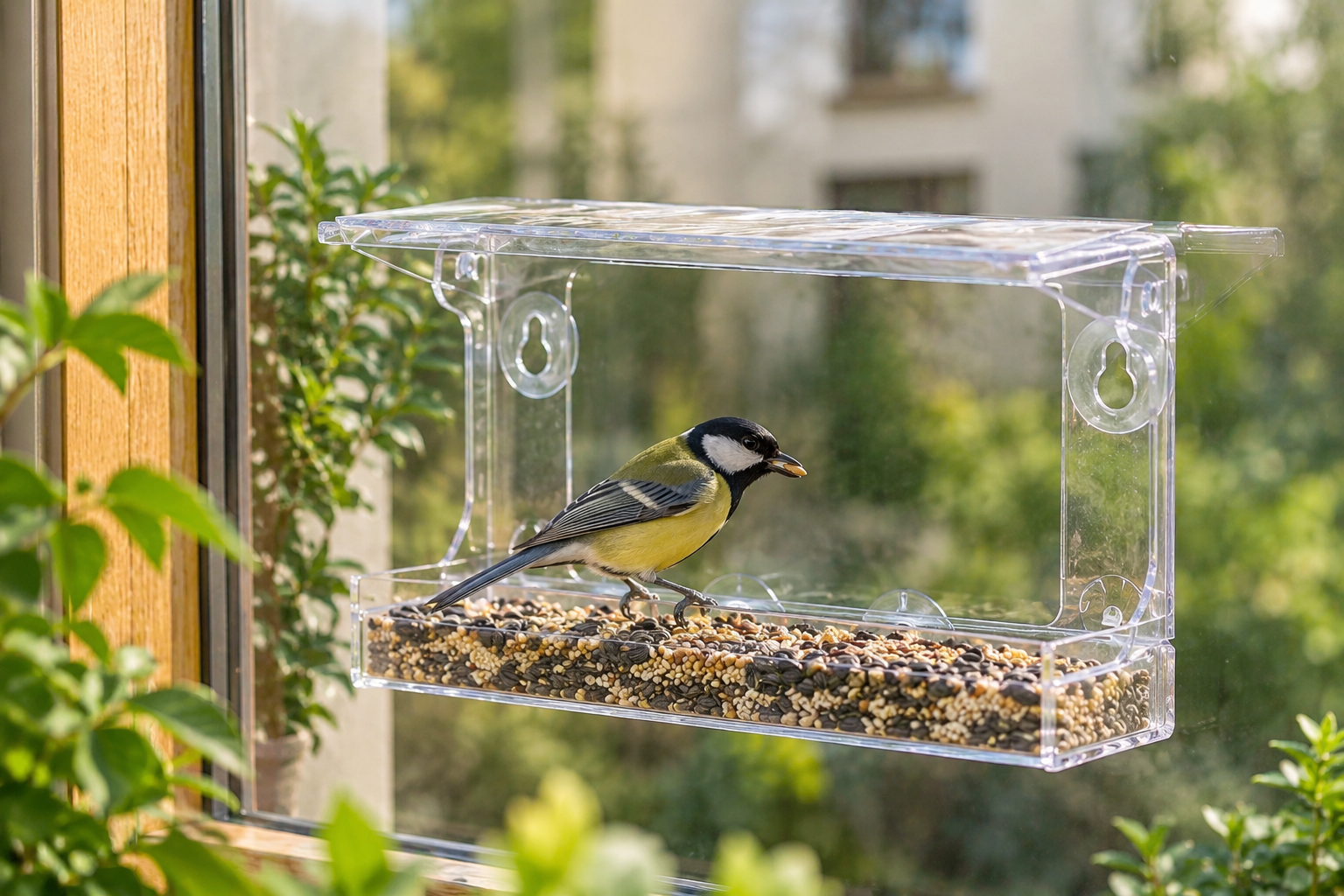
The Hidden Risk of Window Bird Feeding: How to Make Your Window Feeder Safer for Birds

Window bird feeder safety is an important part of responsible bird feeding. While a window-mounted feeder brings wild birds closer to your home, the glass around it can still present risks. Understanding why birds collide with windows and how to make glass more visible can help create a safer environment for your feathered visitors.
A window bird feeder creates an unusual connection with the natural world. Instead of watching birds from across a garden, you can observe their movements, feeding habits and interactions just a few inches away.
But there is an important detail that every window bird feeder owner should understand: birds do not always see glass as a solid barrier.
Window Bird Feeder Safety: What Every Bird Lover Should Know
Windows can reflect trees, clouds and open sky, making what is actually a solid surface appear to be a clear flight path. This means that even a carefully positioned feeder should be part of a broader approach to bird safety.
At BirdClose, we believe that bringing nature closer also means taking responsibility for the wildlife we invite into our everyday surroundings.
Here is how to make your window bird feeding experience safer.
1. Why do birds fly into windows?
Birds do not understand glass in the same way humans do.
There are two main reasons why collisions happen:
Reflection: During daylight, windows can reflect nearby vegetation, trees or the sky. A bird approaching the glass may see what looks like a continuation of the surrounding environment.
Transparency: When a window is transparent, birds may see plants or open space on the other side and attempt to fly towards them.
These collisions are not limited to homes with bird feeders. They can happen anywhere glass creates a misleading visual environment.
However, when birds regularly visit a feeding station close to a window, it becomes especially important to consider the surrounding glass and the birds’ flight paths.
The Cornell Lab of Ornithology explains why birds mistake reflective and transparent glass for open space and shares practical ways to help prevent window collisions. Read their guide to learn more.
2. The 3-foot rule: Why feeder placement matters
Good window bird feeder safety starts with understanding the surrounding glass. Even when a feeder is securely attached, reflections and transparent surfaces elsewhere on the window may still confuse birds.
One widely recommended approach to reducing window collisions is to pay attention to the distance between a bird feeder and the glass.
The general guidance is:
- Within 3 feet (approximately 90 cm): Birds visiting a feeder this close to a window have less room to build up speed before reaching the glass.
- Beyond 30 feet (approximately 9 metres): Feeders placed farther away give birds more space to manoeuvre, although the window itself still needs appropriate collision-prevention measures.
A window-mounted feeder is naturally much closer than three feet. That does not automatically make every collision impossible, but it does make the visibility of the surrounding glass particularly important.
Remember: feeder placement is only one part of bird-window safety.
3. Make the glass visible to birds
One of the most effective ways to reduce collisions is to make glass easier for birds to recognise.
A few simple solutions can help:
External window markers
Use bird-safe decals, dots or other visible patterns on the outside of the glass. They should be arranged closely enough that birds cannot mistake the gaps for a clear flight path.
A commonly recommended spacing is no more than 2 inches (approximately 5 cm) between markers, both horizontally and vertically.
External screens or netting
A properly fitted external screen can make the glass more visible and help cushion a bird if it makes contact.
Reduce reflections
Where possible, consider what your window reflects. Moving reflective objects, adjusting external shading or using suitable window treatments may help reduce misleading reflections.
A single decorative bird silhouette is not necessarily enough. Effective patterns need to cover the relevant glass area with sufficiently small gaps.
The American Bird Conservancy recommends making glass surfaces more visible to birds using appropriately spaced external markers and other bird-friendly solutions. Explore their recommendations for reducing glass collisions.
4. Choose the right location for your window feeder
Before installing a window bird feeder, take a moment to observe the area around your window.
Ask yourself:
- Are there large reflective windows nearby?
- Is there a tree or dense vegetation directly opposite the glass?
- Do birds have a clear approach and departure route?
- Are there cats or other predators that could reach the feeding area?
- Can the feeder be accessed easily for cleaning and refilling?
Avoid placing feeders where visiting birds are forced into narrow spaces or where predators can hide close to the feeding area.
A clear, predictable feeding environment is better for both birds and observers.
5. Keep the feeding area clean and healthy
Bird safety is not only about preventing collisions.
Regular cleaning is essential because food residue, moisture and droppings can create conditions in which harmful bacteria and mould develop.
For a window-mounted feeder, a simple routine can make a significant difference:
- Remove leftover food and debris regularly.
- Wash the feeder with warm water and an appropriate cleaning solution.
- Rinse thoroughly and allow it to dry completely.
- Refill with fresh, dry bird food.
- Check the mounting points and the overall condition of the feeder.
Never leave wet or mouldy seed in the feeding tray.
If you notice several sick or dead birds around a feeding station, stop feeding temporarily, clean and disinfect the equipment appropriately, and follow local wildlife-health guidance before restarting.
6. What should you do if a bird hits your window?
Even with precautions, accidents can happen.
If you find a bird that has collided with your window:
- Keep pets and people away.
- If the bird is stunned but not visibly injured, contact a local wildlife rehabilitator for advice.
- Do not offer food or water to an injured or stunned bird.
- If it is visibly injured, unable to recover or remains unresponsive, seek professional wildlife assistance.
A bird that appears to recover may still have internal injuries, so professional advice is important.
Want to Bring Nature Closer in Just 7 Days?
Making your window a welcoming place for birds is just the beginning. Discover how to create a more rewarding and responsible bird-feeding experience with The Complete Guide to Indoor Wildlife Encounters – A 7-Day Roadmap to Bringing Nature Closer.
This 17-page digital guide offers practical inspiration, feeding tips, seed-selection advice and simple ways to enjoy more meaningful encounters with the wildlife just outside your window.
Take the 7-day journey and discover how much nature can bring into your everyday life.
[Discover the 7-Day Roadmap]
Bringing birds closer should mean protecting them better
The appeal of a window bird feeder is simple: it makes wildlife observation part of everyday life.
You can watch a small bird choose a seed, interact with another visitor or return to the same feeding spot day after day. These moments are what make window bird feeding so rewarding.
But a responsible feeding setup goes beyond choosing an attractive feeder. It means considering the glass, the surrounding environment, hygiene and the birds’ safety.
BirdClose window feeders are designed to bring the experience of birdwatching closer to your home. With thoughtful installation, regular maintenance and appropriate window-safety measures, you can create a more responsible environment for your feathered visitors.
Closer to nature. Closer to what matters.
Explore the BirdClose window bird feeder collection and make every visit to your window a little more meaningful.
Bird safety note: No feeder design can guarantee that window collisions will never happen. The safest approach combines thoughtful feeder placement with visible glass treatments and regular observation of the surrounding area.